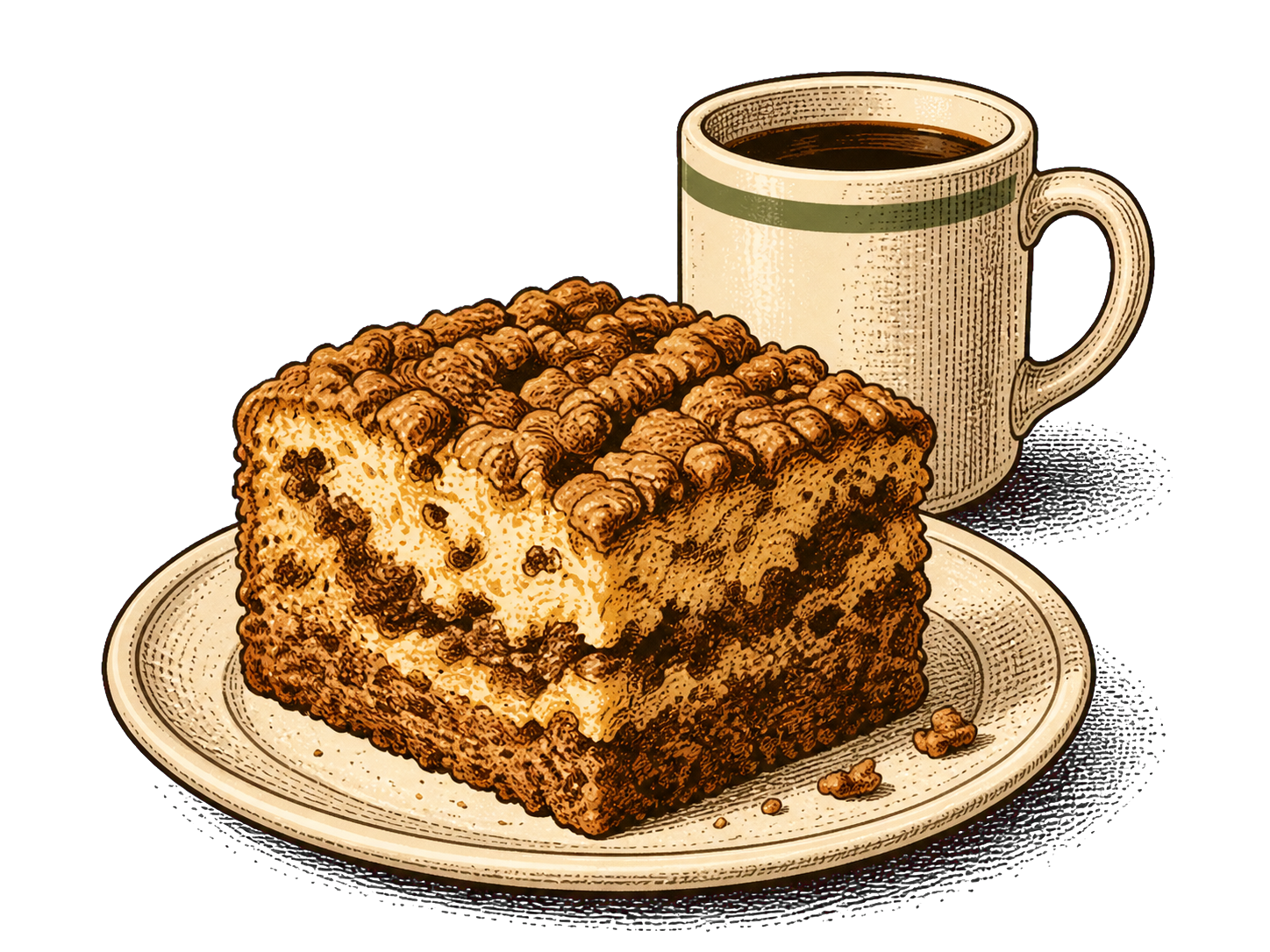
Coffee cake contains no coffee, which is fine because the coffee belongs in the mug beside it. The cake’s job is to be tender, buttery, warmly spiced, and covered with enough crumbs that a plate is not optional.
This version keeps the promise plainly. Sour cream makes the middle soft without making it heavy. Brown sugar and cinnamon build a generous crumb topping. A thin ribbon of that same mixture runs through the center so every forkful gets some crunch, some cake, and a reason to take another sip.
It is a one-pan recipe built for a slow morning, an afternoon pot, or the moment someone says they will “just have a small piece.” Cut nine squares. Let everyone negotiate with themselves.
Gather the plain things.
For the crumb.
- 1 cup all-purpose flour
- 3/4 cup packed light brown sugar
- 2 teaspoons ground cinnamon
- 1/4 teaspoon fine salt
- 6 tablespoons unsalted butter, melted and cooled slightly
For the cake.
- 1 1/2 cups all-purpose flour
- 1 teaspoon baking powder
- 1/2 teaspoon baking soda
- 1/2 teaspoon fine salt
- 8 tablespoons unsalted butter, softened
- 3/4 cup granulated sugar
- 2 large eggs, at room temperature
- 1 teaspoon vanilla extract
- 3/4 cup full-fat sour cream
- 2 tablespoons milk
Use ordinary cinnamon and ordinary flour. The recipe does not improve when the ingredient list becomes a scavenger hunt. Full-fat sour cream is worth keeping because its acidity softens the crumb and its fat carries flavor. Plain Greek yogurt works in a pinch, though the finished cake will be slightly firmer.
Make crumbs that stay crumbs.
The topping should form pebbles, not paste. Whisk the flour, brown sugar, cinnamon, and salt before adding melted butter. Stir with a fork until no dry flour remains and rough clusters begin to form. Then stop.
If you keep stirring, the clusters break down and the mixture turns smooth. It will still taste good, but it will bake into a sandy lid instead of distinct buttery crumbs. Squeeze a handful gently. It should hold together, then separate into uneven pieces when you loosen your fingers.
Set the bowl aside while you mix the batter. That short rest lets the flour absorb the butter and helps the pieces stay intact in the oven.
The best crumb topping looks a little excessive before baking and exactly right afterward.
Mix a tender batter.
Heat the oven to 350°F and line an 8-inch square metal pan with parchment, leaving enough paper on two sides to lift the cake later. Lightly butter the exposed sides.
Whisk the flour, baking powder, baking soda, and salt in a medium bowl. In a larger bowl, beat the softened butter and granulated sugar until the mixture looks pale and slightly fluffy. This takes about three minutes with a hand mixer and a little longer with a wooden spoon.
Add the eggs one at a time, mixing until each disappears before adding the next. Stir in the vanilla. The batter may look slightly broken at this stage. That is normal; the dry ingredients will bring it together.
Add half of the flour mixture and fold just until most of the streaks disappear. Stir in the sour cream and milk, then fold in the remaining flour. Stop when the batter is smooth enough to spread but still looks thick. Overmixing develops gluten and trades tenderness for bounce. We are making cake, not a stress ball.
Layer it without overthinking it.
Step 1: Build the bottom.
Spread a little more than half of the batter in the prepared pan. It will be thick, so use an offset spatula or the back of a spoon and work it into the corners.
Step 2: Add the middle.
Scatter about one third of the crumb mixture over the batter. Keep the layer loose and even rather than pressing it down.
Step 3: Cover gently.
Spoon the remaining batter across the crumb layer in small dollops. Spread the dollops together with a light hand. A few crumbs may move around; the cake will not report you.
Step 4: Finish with crumbs.
Break the remaining topping into pieces ranging from peas to small grapes and scatter them across the surface. Let some touch and leave small gaps for the cake to rise between them.
Step 5: Bake and wait.
Bake for 35 to 40 minutes, until the center springs back lightly and a toothpick inserted through a bare patch comes out with a few moist crumbs.
The top will become golden around the edges before the center is ready. If the crumbs darken too quickly, lay a loose sheet of foil over the pan for the final ten minutes. Do not seal it tightly; trapped steam softens the topping.
Know when it is done.
Coffee cake is easy to overbake because the crumb topping hides the surface. Start checking at 35 minutes. Press the center gently through a gap in the crumbs. It should spring back instead of holding an indentation.
A toothpick is useful, but choose the testing spot carefully. Push it through exposed cake rather than a buttery crumb cluster. Melted brown sugar on the toothpick can look like raw batter and convince you to bake five unnecessary minutes.
The internal temperature will be about 200°F if you prefer a number. More importantly, the edges should look set without pulling far from the pan, and the kitchen should smell like cinnamon before it smells toasted.
Cool the cake in the pan for at least 30 minutes. The middle is delicate while hot, and the crumbs need time to firm. Lift it out by the parchment and cut with a serrated knife using short, gentle strokes.
Serve it with coffee.
Coffee cake is best slightly warm or at room temperature. A medium-roast drip coffee works especially well: enough sweetness to echo the brown sugar and enough brightness to keep the butter from feeling heavy. Dark roast is excellent if you like a deeper toasted contrast.
The cake keeps covered at room temperature for two days. Rewarm a square for ten seconds in the microwave or five minutes in a low oven. Refrigeration extends its life but firms the butter, so bring chilled pieces back to room temperature before serving.
To freeze it, wrap individual squares and place them in a sealed container for up to two months. Thaw on the counter, then warm briefly. The topping will not be quite as crisp, but future you will still be pleased.
Small changes that work.
Add one half cup of toasted chopped pecans to the crumb mixture for more crunch. A teaspoon of orange zest in the batter makes the cinnamon taste brighter without turning the cake citrusy. A handful of blueberries can be scattered over the middle layer, though juicy fruit may add five minutes to the bake.
Avoid adding brewed coffee to the batter. It thins the mixture, muddies the cinnamon, and solves a problem the mug already solved. If you want a coffee note, add one teaspoon of instant espresso powder to the crumb mixture. It deepens the brown sugar without announcing itself.
Most importantly, keep the crumbs uneven. The tiny pieces crisp, the large pieces stay buttery, and the contrast is what makes the cake worth naming after the drink beside it.
If the crumbs have other plans.
Warm kitchens can soften the topping before the cake reaches the oven. If the mixture looks glossy or begins smearing instead of breaking into clusters, place the bowl in the refrigerator for ten minutes. Cool butter firms the crumbs without changing the recipe.
If the batter seems unusually stiff, check how the flour was measured. Scooping directly from the bag can pack too much into the cup. Fluff the flour, spoon it into the measure, and level the top, or weigh 180 grams for the cake portion. The finished batter should hold a soft mound but still spread without a fight.
A glass pan also changes the pace. Glass retains heat longer than metal, so lower the oven to 325°F and expect a few additional minutes. Let visual cues decide: set center, springy surface, and moist crumbs on the tester.